Balancing an Oily or Dry Scalp: 7 Proven Steps for Healthy Hair
Balancing an Oily or Dry Scalp: 7 Proven, Essential Steps for Healthier Hair
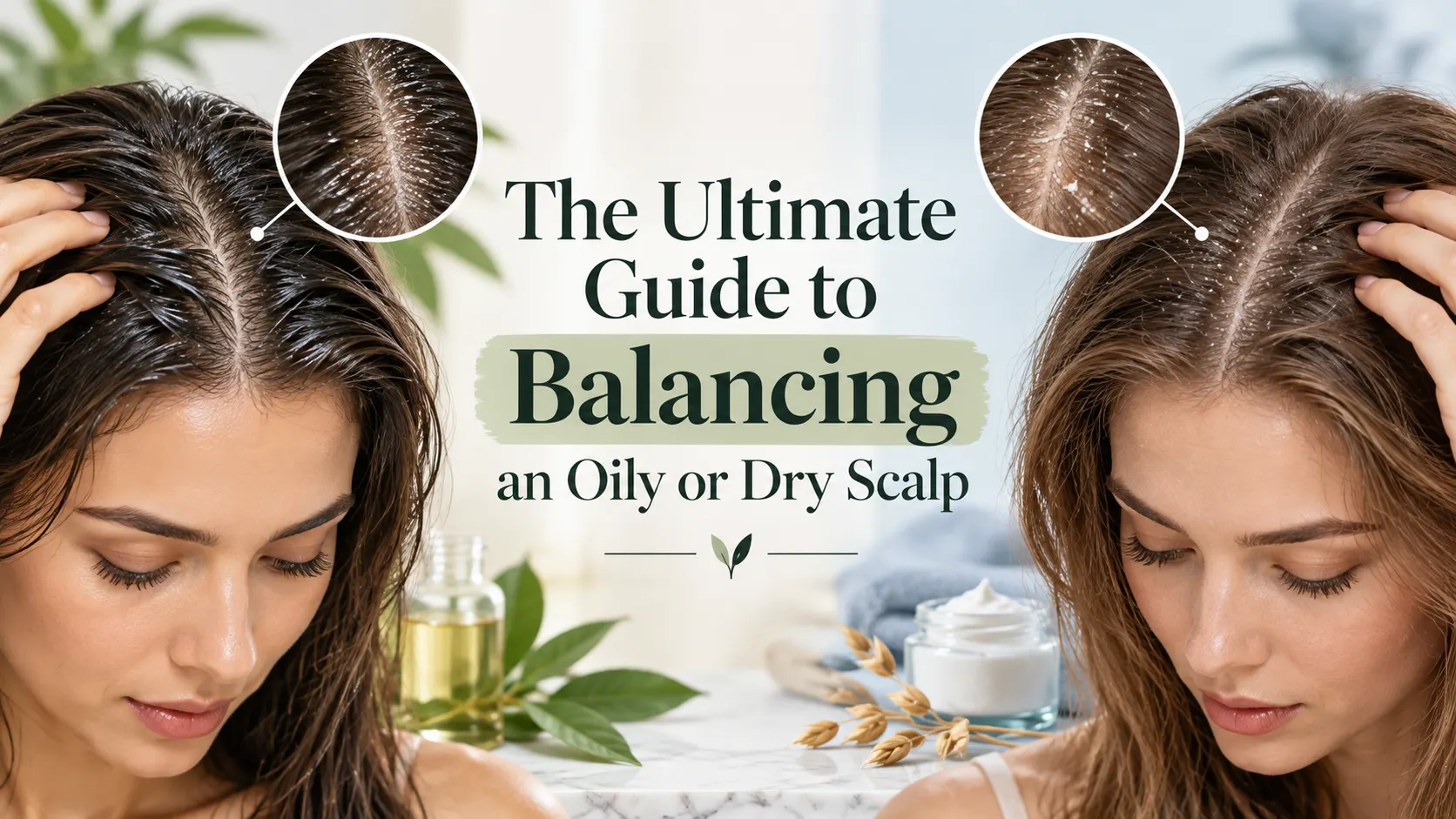
A healthy scalp is the foundation of a comfortable, manageable hair-care routine. However, many people experience problems such as excessive oiliness, tightness, itching, visible flakes, or dryness that seems to return soon after washing. Understanding the difference between these symptoms is the first step toward balancing an oily or dry scalp without unnecessarily irritating the skin.
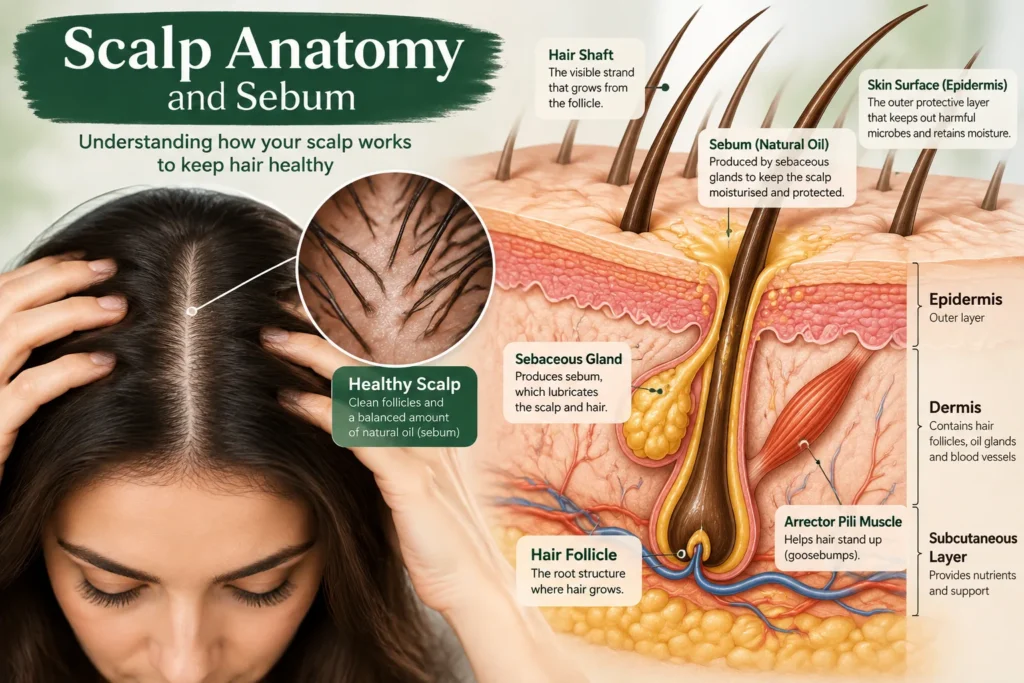
Your scalp contains sebaceous glands that produce sebum, a natural oily substance that helps lubricate the skin and hair. While some sebum is essential for normal skin function, excessive oil can leave hair looking greasy, whereas inadequate surface moisture or a disrupted skin barrier can contribute to tightness, roughness, and flaking.
Importantly, an oily scalp is not automatically unhealthy, and a dry-feeling scalp does not always mean that the skin produces too little oil. Dandruff, seborrheic dermatitis, eczema, psoriasis, irritating hair products, and environmental conditions can produce overlapping symptoms. According to the American Academy of Dermatology (AAD), distinguishing simple dryness from other scalp conditions is important when selecting appropriate care.
This comprehensive guide explains how balancing an oily or dry scalp begins with understanding your symptoms, choosing suitable cleansing products, supporting the scalp barrier, and recognizing when professional treatment is necessary. It also explores common ingredients, natural hair-care practices, daily habits, and practical routines for different scalp types.
The objective is not to eliminate all natural oils. It is to maintain a comfortable scalp, cleanse effectively, protect the skin barrier, and care for the hair without relying on unrealistic promises.
What Does Balancing an Oily or Dry Scalp Actually Mean?
Balancing an oily or dry scalp means developing a hair-care routine that manages excess surface oil while avoiding unnecessary dryness, irritation, and product buildup.
The scalp is living skin. Like the skin on your face, it contains oil-producing glands, a protective outer barrier, and microorganisms that normally live on the skin. These systems interact with genetics, hormones, environmental conditions, and personal care habits.
Understanding the Role of Sebum
Sebum is a mixture of lipids produced by sebaceous glands. It helps lubricate the skin and contributes to the surface environment that protects it from excessive moisture loss.
However, sebum production varies between individuals. Genetics, hormonal influences, age, and other physiological factors can affect how oily the scalp becomes.
When sebum accumulates quickly, hair roots may appear shiny or greasy, and fine hair may lose volume. When the scalp becomes irritated or loses moisture, it may feel tight, uncomfortable, or itchy.
Neither situation should automatically be treated by applying more oil or using increasingly harsh cleansing products.
Oiliness and Dryness Can Occur Together
One common misconception is that the scalp must be either oily or dry. In reality, a person may have an oily scalp and dry hair lengths.
The roots may become greasy within a day, while the ends feel rough, tangled, or brittle. This can occur because the scalp produces sebum, but the hair lengths receive less natural lubrication and may also be affected by heat styling, coloring, friction, and environmental exposure.
Another person may have an oily, flaky scalp because of dandruff or seborrheic dermatitis. The flakes in this situation do not necessarily indicate simple dryness.
Recognizing these differences helps prevent a routine from becoming unnecessarily complicated.
1. Identify Whether Your Scalp Is Oily, Dry, or Irritated
Before purchasing products, observe your scalp’s condition over several days. Your symptoms, washing habits, and response to existing products can provide useful clues.
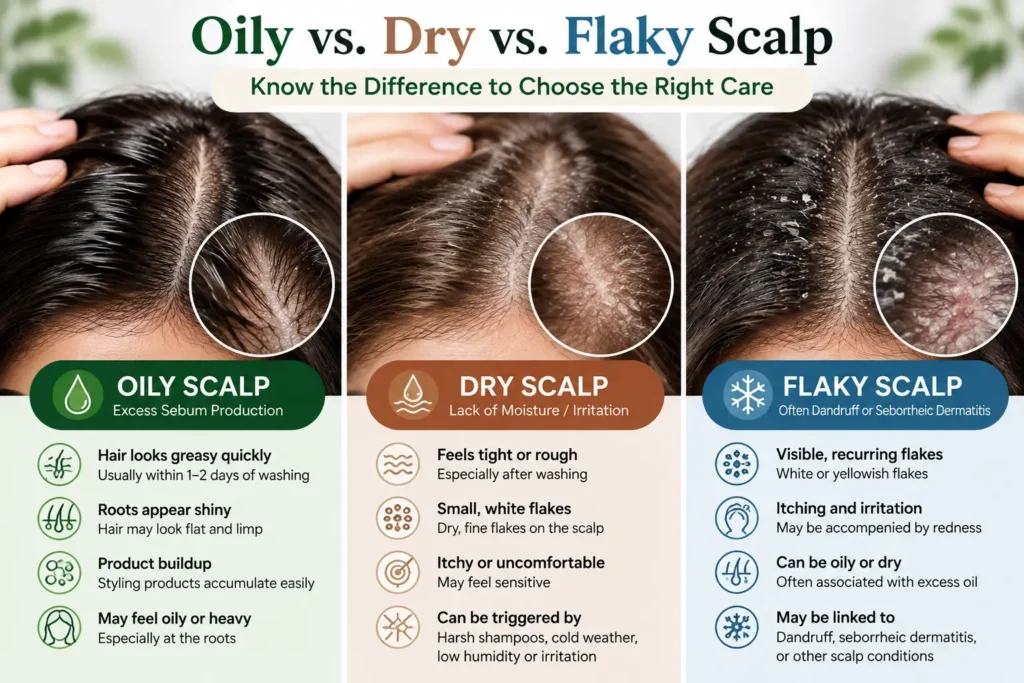
Signs of an Oily Scalp
An oily scalp may show the following characteristics:
- Hair roots become greasy relatively quickly after washing.
- Hair looks flat or separates into oily strands.
- The scalp feels coated after several days without cleansing.
- Styling products accumulate around the roots.
- Fine hair loses volume sooner than expected.
Oiliness alone does not establish a medical problem. Some people naturally produce more sebum and simply benefit from more frequent washing.
Signs of a Dry Scalp
A dry scalp may feel tight, rough, or uncomfortable, particularly after washing. Small flakes may appear, and the skin may feel worse during cold weather or in environments with low humidity.
Possible contributing factors include:
- Frequent washing with products that irritate or excessively dry the skin.
- Very hot shower water.
- Low humidity and cold weather.
- Fragrances or other ingredients that do not suit your skin.
- Skin conditions that affect the scalp barrier.
If dryness is persistent, painful, or accompanied by substantial redness, crusting, or thick scaling, do not assume that a moisturizing shampoo alone will solve the problem.
Signs That Flaking May Be Dandruff
Dandruff can produce white or yellowish flakes, itching, and sometimes an oily-looking scalp. It may be associated with seborrheic dermatitis, a common inflammatory skin condition involving interactions between sebum, skin microorganisms, and individual susceptibility.
The AAD guide to treating dandruff explains that appropriate anti-dandruff shampoos and correct washing practices can help manage many mild cases.
Dry scalp and dandruff can look similar. If symptoms are persistent or difficult to distinguish, a dermatologist can assess the scalp and recommend appropriate treatment.
A Simple Observation Method
After washing with a familiar, well-tolerated shampoo, observe how your scalp and hair behave.
- If your roots become greasy quickly but the lengths remain dry, consider a scalp-focused cleansing routine and conditioning for the hair lengths.
- If the scalp feels tight immediately after washing, reassess the shampoo, water temperature, and washing technique.
- If itching and flakes recur regardless of moisturizing products, consider whether dandruff or another skin condition may be involved.
- If a new product triggers burning, redness, or a rash, stop using it rather than trying to overcome the reaction.
These observations can guide product selection, but they are not a substitute for medical diagnosis.
2. Choose the Right Shampoo for Your Scalp Type
Shampoo removes excess sebum, sweat, environmental debris, dead skin cells, and styling-product residue. The right cleansing routine should leave the scalp comfortable without making the hair unnecessarily rough.
There is no single shampoo that is ideal for every scalp.
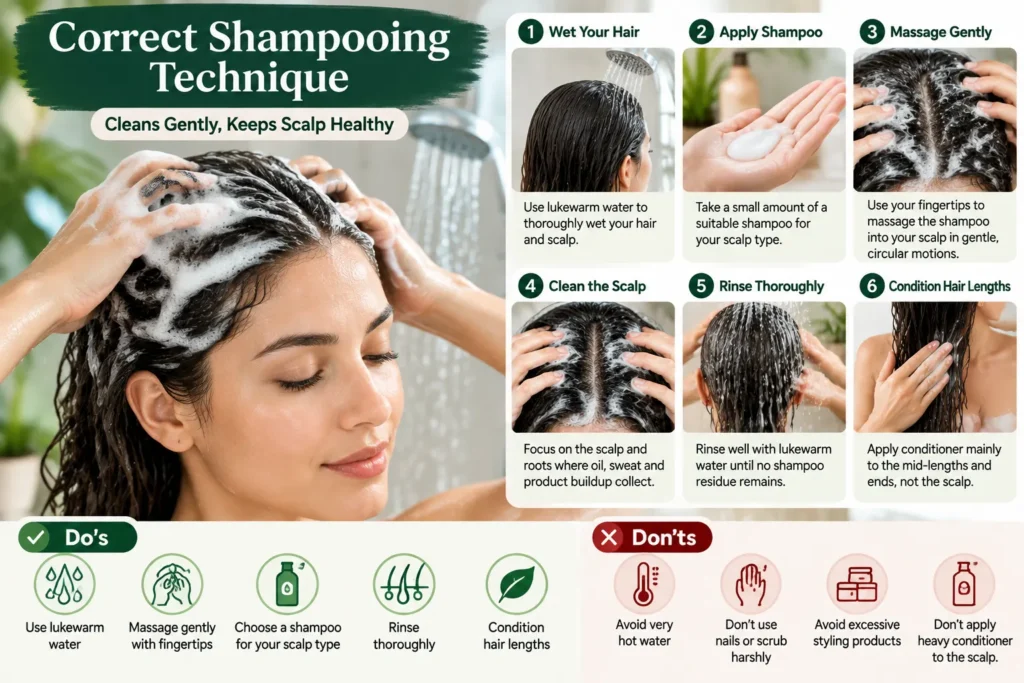
Shampooing an Oily Scalp
If your scalp becomes greasy quickly, regular cleansing can help remove accumulated oil. Depending on your hair type and how quickly oil develops, daily or alternate-day washing may be appropriate.
Look for a shampoo formulated for oily roots that cleans effectively without causing persistent irritation.
Useful product characteristics may include:
- A cleansing formula that removes excess sebum and styling residue.
- A texture that rinses easily.
- A fragrance-free option if your scalp is sensitive.
- A formulation designed for your hair texture and condition.
Avoid assuming that a shampoo must produce an extremely squeaky-clean sensation to work well. That feeling does not prove that the scalp is healthier.
Shampooing a Dry Scalp
If your scalp feels dry or tight, consider a gentle, non-medicated shampoo that cleans without unnecessary irritation.
Helpful product characteristics may include mild cleansing agents, a fragrance-free formula, and ingredients intended to support skin comfort.
Use lukewarm water and rinse thoroughly. Very hot water and aggressive scrubbing can aggravate an already uncomfortable scalp.
Conditioner can help protect the hair lengths, but it should not automatically be treated as a cure for an underlying scalp condition.
How Often Should You Wash Your Hair?
Washing frequency should reflect your individual needs rather than a universal rule.
People with oily roots and straight or fine hair may need to wash more often. People with tightly curled, coily, thick, or fragile hair may prefer less frequent washing to reduce dryness and breakage.
Consider adjusting your routine if your scalp remains uncomfortable, your hair becomes excessively greasy, or visible buildup develops between washes.
The AAD provides additional dermatologist-recommended healthy hair-care tips, including guidance on washing according to hair type and applying shampoo primarily to the scalp.
Use Medicated Shampoo When Appropriate
If your main concern is dandruff or seborrheic dermatitis, an ordinary moisturizing shampoo may not address the underlying issue.
Depending on the product and your circumstances, anti-dandruff shampoos may contain ingredients such as ketoconazole, selenium sulfide, salicylic acid, or other recognized active ingredients.
Different ingredients work in different ways. Some target yeast associated with dandruff, while others help loosen scales or address related symptoms.
Follow the label instructions carefully, including any recommended contact time. If symptoms persist despite appropriate use, consult a pharmacist or dermatologist.
3. Support the Scalp’s Natural Skin Barrier
A comfortable scalp depends on more than the amount of oil present. The skin barrier helps limit excessive water loss and protects the skin from external irritants.
When this barrier is irritated, the scalp may feel tight, itchy, or sensitive even if the hair roots appear oily.
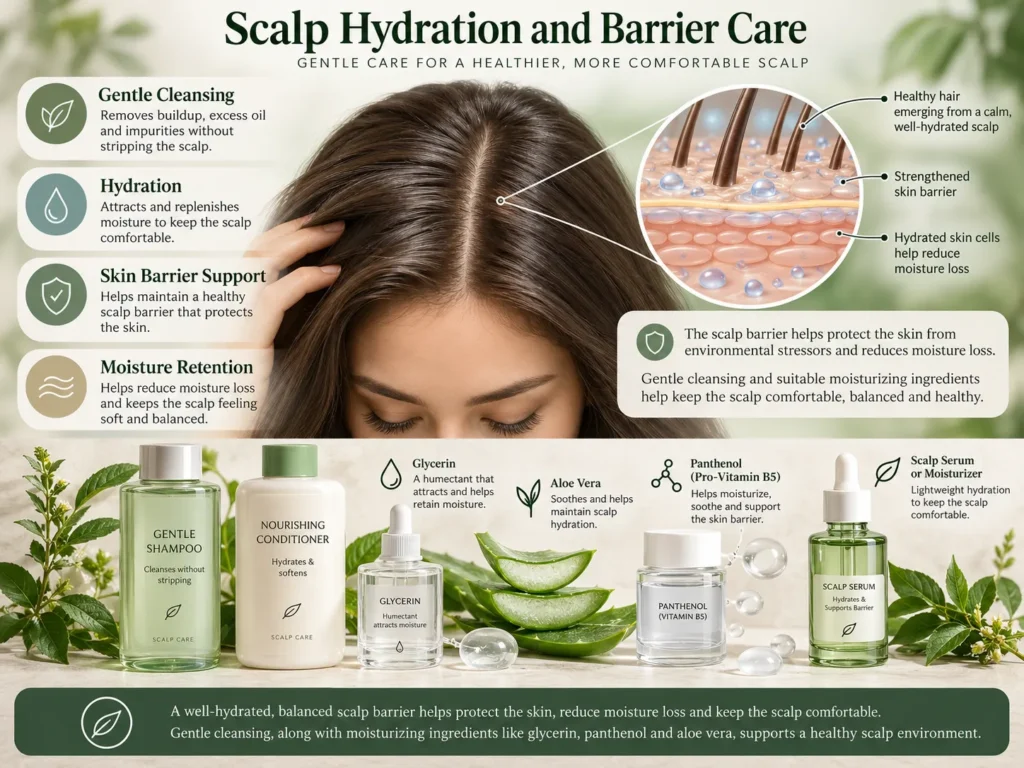
Understand Hydration and Oil
Hydration refers to water within the skin, whereas oils are lipids that can lubricate the surface and influence moisture loss.
These concepts are related but not interchangeable.
Applying oil does not automatically supply water to the skin. Likewise, washing away excess sebum does not mean that the scalp must become dry.
A balanced routine considers cleansing, skin comfort, and appropriate conditioning separately.
Look for Suitable Moisturizing Ingredients
Depending on the product formulation, ingredients such as glycerin and panthenol can support hydration or improve the feel of skin and hair.
Emollient ingredients may help soften dry skin, while conditioners can improve the smoothness and manageability of hair fibers.
However, ingredient performance depends on concentration, formulation, and the condition being addressed. A product containing a desirable ingredient is not automatically suitable for every individual.
If your scalp reacts easily, choose a simple formulation and introduce new products gradually.
Avoid Unnecessary Irritation
Repeated exposure to irritating products can make scalp symptoms harder to manage.
Be cautious with strongly fragranced preparations, aggressive exfoliation, concentrated essential oils, and homemade mixtures containing ingredients that have not been adequately evaluated for scalp use.
Natural ingredients are not automatically non-irritating or allergy-free.
If a product repeatedly causes discomfort, discontinue it rather than trying to neutralize the reaction with additional products.
4. Use Hair Oils Carefully Instead of Applying Them Automatically
Hair oils are popular in many traditional beauty routines. They may improve lubrication, reduce friction, and make certain hair types easier to manage.
However, oiling is not essential for everyone, and the best approach depends on whether the main concern is dry hair, scalp discomfort, or excess oil.
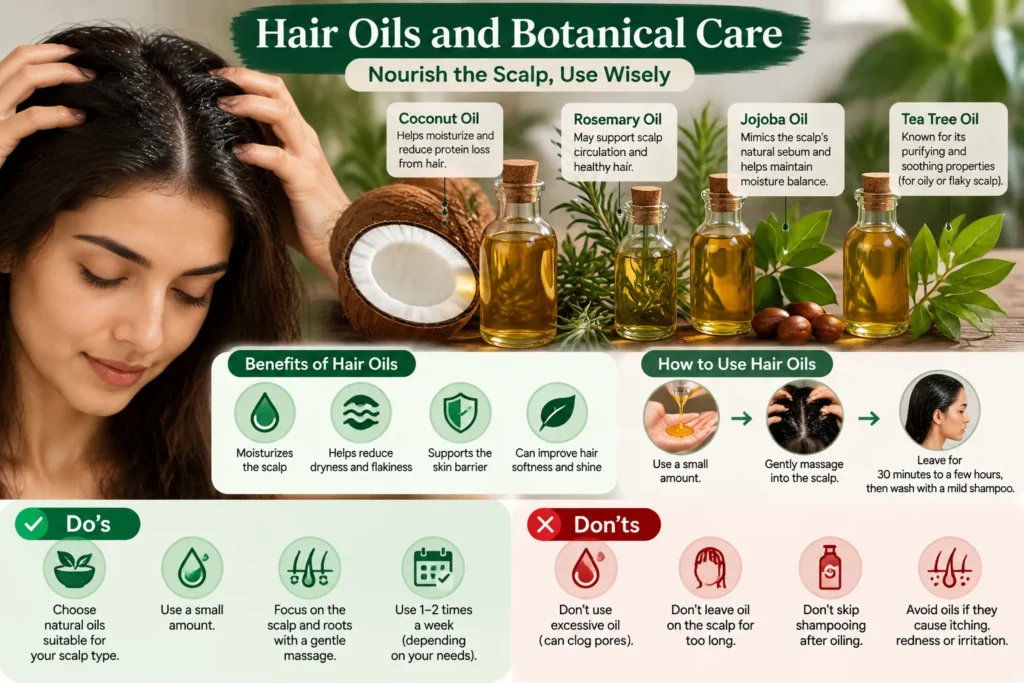
When Oil May Help
A small amount of a suitable oil applied to the hair lengths may help reduce friction and improve softness.
Some people also find pre-shampoo oiling useful for managing dry or fragile hair. The benefit is primarily cosmetic and depends on the oil, hair condition, and application method.
If your roots are oily but the ends are dry, consider applying a small amount to the mid-lengths and ends rather than coating the entire scalp.
When Oil May Not Be Appropriate
Heavy oil application may make an already oily scalp feel greasy. In people prone to dandruff or seborrheic dermatitis, adding oil to the scalp may be unhelpful or may worsen symptoms for some individuals.
An oil treatment should not replace a medicated shampoo when one is needed.
If you notice increased itching, flakes, redness, or discomfort after oiling, discontinue the practice and reassess the routine.
What About Coconut, Olive, or Mustard Oil?
Different oils have different compositions and sensory characteristics.
Coconut oil has been studied for its effects on hair-fiber protein loss under particular conditions. That does not mean it treats every scalp disorder or promotes new hair growth.
Olive oil and mustard oil are used in traditional hair-care practices, but evidence that they reliably correct scalp oil production is limited. Mustard oil may also irritate sensitive skin.
Choose products based on their intended use, your tolerance, and the specific problem you want to address. No carrier oil should be considered a universal scalp treatment.
5. Distinguish Dry Scalp From Dandruff Before Treating Flakes
One of the most important steps in balancing an oily or dry scalp is understanding why flakes appear.
Although dry scalp and dandruff can both cause visible flakes, their underlying mechanisms and appropriate treatments may differ.
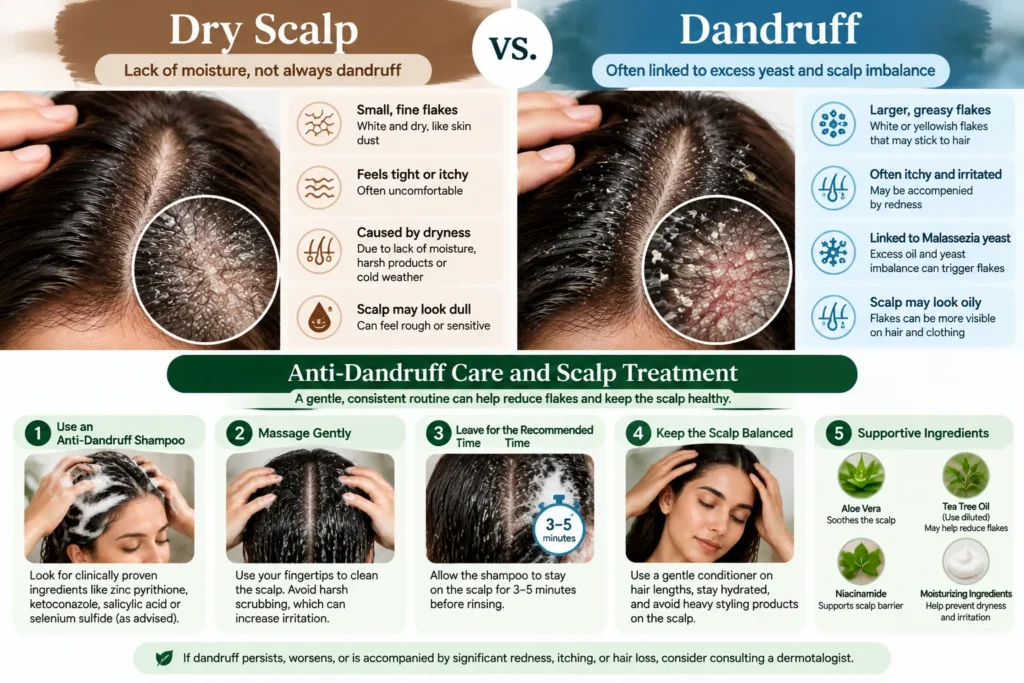
Dry Scalp
Dryness may occur when the skin loses too much water or becomes irritated by environmental conditions or hair-care products.
A person may notice tightness, itching, and small flakes. A gentle shampoo and avoiding irritating products may help when simple dryness is the main issue.
Dandruff and Seborrheic Dermatitis
Dandruff is commonly associated with scaling and may occur alongside an oily scalp. Seborrheic dermatitis can cause recurring flakes and inflammation, often affecting oily areas such as the scalp.
The condition is associated with interactions among sebum, the skin’s microbial environment, and the body’s inflammatory response.
The clinical review An Overview of the Diagnosis and Management of Seborrheic Dermatitis, available through PubMed, discusses treatment approaches including topical antifungal agents and other therapies selected according to the severity and location of symptoms.
Why the Difference Matters
Using only oils or heavy moisturizing products may not adequately address dandruff. Conversely, repeatedly using strong medicated or exfoliating products when the problem is simple dryness may increase discomfort.
If flakes persist, the scalp becomes inflamed, or symptoms return soon after treatment, professional assessment can help identify the cause.
6. Build a Practical Routine for Your Scalp Type
A useful routine should be simple enough to follow consistently. It should also leave room for adjustment when the weather, hair condition, or scalp symptoms change.
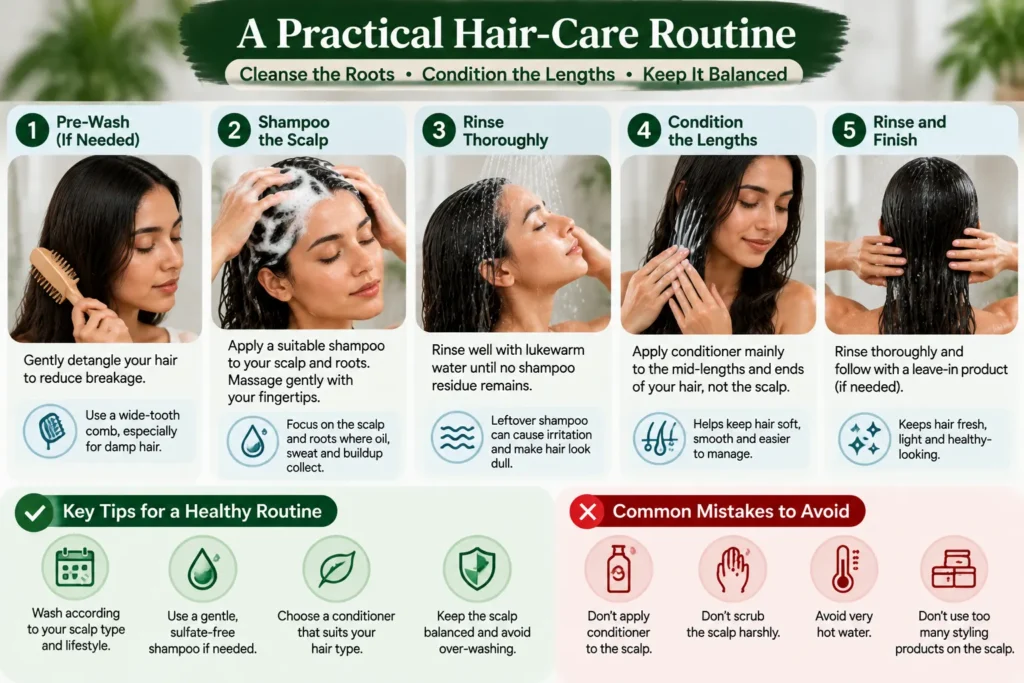
Routine for an Oily Scalp
Cleansing: Wash as frequently as needed to manage oil without causing persistent irritation.
Shampoo selection: Choose an effective cleanser suited to your hair type. If dandruff is also present, consider an appropriate anti-dandruff shampoo according to its instructions.
Conditioning: Apply conditioner mainly to the mid-lengths and ends if the roots become weighed down easily.
Styling: Avoid unnecessary layers of heavy products at the roots. Clean brushes and wash reusable styling accessories regularly.
Monitoring: If itching or flakes persist despite appropriate care, do not assume that more frequent washing is the only solution.
Routine for a Dry or Sensitive Scalp
Cleansing: Use a gentle shampoo and lukewarm water.
Conditioning: Condition the hair lengths to reduce tangling and friction.
Product selection: Consider fragrance-free options if fragranced products appear to trigger discomfort.
Styling: Minimize excessive heat, harsh brushing, and tight hairstyles that pull on the scalp.
Monitoring: If dryness continues, consider whether an underlying skin condition or a product reaction may be contributing.
Routine for an Oily Scalp With Dry Hair
This combination requires separate attention to the scalp and hair lengths.
Cleanse the roots according to their needs, but avoid repeatedly applying strong shampoo to the entire length of the hair. Apply conditioner where the hair needs it most, and use a small amount of suitable leave-in conditioning product if necessary.
This approach can help manage greasy roots without ignoring the needs of dry ends.
7. Review Lifestyle and Environmental Factors
Hair and scalp care is influenced by everyday habits, but lifestyle changes should not be presented as guaranteed cures for oiliness, dryness, or hair loss.
Weather and Humidity
Cold weather and low humidity can contribute to dry-feeling skin. Hot weather and sweating may make some people feel the need to cleanse more frequently.
Adjust your routine when conditions change, rather than following a fixed schedule regardless of how your scalp feels.
Stress and General Well-Being
Stress can influence health and may aggravate certain skin conditions in some people. Adequate sleep, regular physical activity, and manageable routines support general well-being.
However, these habits do not replace treatment for persistent inflammatory scalp conditions.
Nutrition and Hair Health
A varied, balanced diet supports general health and normal hair growth. Hair shedding may sometimes be associated with nutritional deficiencies, illness, hormonal changes, medications, or other factors.
Taking supplements without a demonstrated need is not a reliable way to correct scalp oiliness or dryness. Excessive intake of certain nutrients may also be harmful.
If you experience significant shedding, discuss possible causes with a qualified healthcare professional rather than assuming that a particular oil or supplement will solve the problem.
Hair Styling and Mechanical Damage
Frequent heat styling, aggressive brushing, tight hairstyles, and chemical processing can damage hair fibers or contribute to breakage.
Use gentle detangling methods and avoid pulling on wet hair. If you use heat tools, limit excessive heat exposure.
Remember that hair breakage and hair loss from the follicle are different problems and may require different approaches.
A Simple Four-Week Scalp-Care Review
A structured review can help you understand whether a new routine is making your scalp more comfortable.
Week 1: Establish a Baseline
Record how quickly your roots become greasy, whether your scalp feels tight after washing, and whether flakes or itching occur.
Avoid introducing several new products at once. This makes it easier to identify which changes help or cause problems.
Week 2: Adjust Cleansing
Choose a shampoo that suits your scalp type and adjust washing frequency according to oiliness, hair texture, and comfort.
If you suspect dandruff, use an appropriate anti-dandruff product according to its instructions rather than relying exclusively on oils.
Week 3: Improve Conditioning
Review where you apply conditioner and styling products. If your scalp becomes greasy easily, keep heavier products mainly on the hair lengths.
If your scalp is dry or sensitive, focus on gentle cleansing and avoiding potential irritants.
Week 4: Review Your Symptoms
Assess whether itching, tightness, greasiness, and visible flakes have improved.
If your symptoms are unchanged, worsening, or repeatedly returning, consider professional advice. Some scalp conditions need targeted treatment rather than further cosmetic experimentation.
This four-week approach is a practical observation plan, not a guarantee that every scalp concern will resolve within a month.
Common Scalp-Care Mistakes to Avoid
Several well-intentioned habits can make scalp care more complicated than necessary.
Washing Too Infrequently Despite Heavy Oil Buildup
There is no universal rule that everyone should wash only once or twice a week. If your scalp becomes oily quickly, less frequent washing may leave you uncomfortable or allow product residue to accumulate.
Washing Aggressively to Remove Every Trace of Oil
Excessively harsh cleansing and vigorous scrubbing may irritate the scalp. Clean effectively, but avoid treating natural sebum as something that must be eliminated completely.
Applying Oil to Every Scalp Problem
Oil may help with hair lubrication, but it is not a universal treatment for flaking, itching, or inflammation.
Scratching or Scrubbing Away Flakes
Scratching can damage the skin and worsen irritation. If flakes persist, identify the likely cause rather than trying to remove them mechanically.
Changing Products Too Frequently
Introducing multiple shampoos, masks, oils, and treatments in a short period makes it difficult to determine what your scalp tolerates.
A simple routine allows clearer observation.
Ignoring Persistent Symptoms
Pain, swelling, sores, crusting, substantial scaling, patchy hair loss, or ongoing itching deserve attention. Do not delay assessment by repeatedly experimenting with home remedies.
When Should You See a Dermatologist?
Professional advice is appropriate when symptoms are severe, persistent, recurrent, or unexplained.
Seek medical assessment if you experience:
- Persistent itching, burning, or scalp pain.
- Significant redness, swelling, sores, or crusting.
- Thick or widespread scales that do not improve with appropriate care.
- Patchy hair loss or rapidly increasing shedding.
- Symptoms involving the eyebrows, face, or other areas in addition to the scalp.
- A suspected allergic reaction to a hair-care product.
- No meaningful improvement after using an appropriate over-the-counter treatment as directed.
Conditions such as seborrheic dermatitis, psoriasis, eczema, contact dermatitis, and fungal infections can resemble ordinary dryness or dandruff. Some require prescription treatment or a different management strategy.
A dermatologist can examine the scalp, review your hair-care routine, and determine whether further testing or targeted treatment is appropriate.
Final Thoughts
Balancing an oily or dry scalp starts with recognizing that scalp oil, skin hydration, hair conditioning, and scalp disease are related but distinct concerns.
An oily scalp may benefit from more frequent, appropriate cleansing. A dry-feeling scalp may respond to gentler products and reduced exposure to irritants. Recurring flakes may require treatment for dandruff or another skin condition rather than additional oil.
The most effective approach is usually a consistent routine built around your symptoms, hair texture, and product tolerance. Avoid assuming that expensive products, complicated ingredient combinations, or natural remedies are automatically better.
Shifaiya Care encourages informed, practical hair care grounded in realistic expectations. Pay attention to your scalp, select products carefully, and seek professional guidance when symptoms persist.
Healthy-looking hair does not require eliminating every trace of oil or following every new trend. It begins with understanding what your scalp needs and choosing a routine that supports comfort, cleanliness, and healthy hair management.
Frequently Asked Questions (FAQs)
1. How can I balance an oily or dry scalp naturally?
Start by identifying whether the main concern is excess oil, simple dryness, product irritation, or dandruff. Wash according to your scalp’s needs, use lukewarm water, select a suitable shampoo, and avoid irritating ingredients. Natural oils may improve hair lubrication, but they do not necessarily correct scalp oil production or treat inflammatory conditions.
2. How often should I wash an oily scalp?
Some people with oily roots need daily washing, while others are comfortable washing every other day or less frequently. The appropriate schedule depends on sebum production, hair texture, physical activity, and product buildup. Choose a frequency that keeps your scalp comfortable without causing irritation.
3. Can a scalp be oily and dry at the same time?
Yes. Your scalp may produce plenty of sebum while your hair lengths remain dry or damaged. Some scalp conditions can also cause oily-looking skin and flakes. Treat the roots and hair lengths according to their different needs rather than applying heavy oils everywhere.
4. What is the difference between a dry scalp and dandruff?
A dry scalp may result from moisture loss, environmental conditions, or irritating products. Dandruff commonly causes recurring flakes and itching and may be associated with seborrheic dermatitis. Their symptoms overlap, so persistent flaking may require assessment by a dermatologist. Medicated anti-dandruff shampoo can help when dandruff is the cause.
5. Which shampoo is best for an oily or dry scalp?
An oily scalp may benefit from a cleanser that effectively removes excess sebum, while a dry or sensitive scalp may respond better to a gentle, non-medicated shampoo. If dandruff is present, a shampoo containing an appropriate active ingredient may be needed. Choose products based on your symptoms and tolerance rather than marketing claims alone.
6. Does scalp oiling help balance natural oil production?
There is insufficient evidence that applying hair oil reliably regulates the scalp’s natural sebum production. Oils can lubricate hair fibers and improve manageability, but they may also leave the roots greasy or aggravate discomfort in some people. If your scalp is oily or prone to dandruff, consider limiting oil to the hair lengths.
7. Can dry scalp cause hair loss?
Simple scalp dryness does not automatically cause hair loss. However, an underlying inflammatory condition, severe scratching, or another scalp disorder may contribute to hair damage or shedding. If you notice patchy hair loss, substantial shedding, pain, or persistent inflammation, seek professional assessment to identify the cause.
8. Are natural ingredients always safe for scalp care?
No. Plant oils, essential oils, botanical extracts, and fragranced products can cause irritation or allergic contact dermatitis. A product being natural does not guarantee that it is suitable for sensitive skin. Introduce unfamiliar products cautiously, avoid applying them to broken skin, and discontinue use if a reaction develops.
9. How long does it take to improve scalp balance?
The timeframe depends on the underlying cause and the routine being used. Changes in oiliness may become noticeable after adjusting cleansing practices, while dandruff and inflammatory conditions may require several weeks of appropriate treatment or professional guidance. There is no universal timeline, and persistent symptoms should not be ignored.
10. When should I seek medical treatment for an oily or dry scalp?
Consult a dermatologist if symptoms are persistent, severe, or worsening, or if you develop painful skin, significant redness, sores, thick scales, or unexplained hair loss. A clinician can distinguish cosmetic dryness from conditions such as seborrheic dermatitis, psoriasis, eczema, or fungal infection and recommend suitable treatment.
Patch-Test and Medical Safety Disclaimer
Patch-test guidance: Before using a new cosmetic product, follow the manufacturer’s directions for testing it on a small area of intact skin. For many leave-on products, a small-area test over several days may help identify obvious irritation. Do not apply a product to broken, inflamed, or infected skin. A home patch test cannot guarantee that an allergic reaction will not occur, and it does not establish the microbiological safety of a homemade preparation.
Stop-use guidance: Discontinue a product immediately if you experience burning, persistent itching, redness, swelling, or a rash. Rinse the affected area gently. Seek medical advice if symptoms persist or worsen. Severe swelling or difficulty breathing requires emergency medical care.
Medical disclaimer: This article is intended for general educational purposes only and is not a substitute for individualized medical advice, diagnosis, or treatment. Scalp dryness, oiliness, itching, and flaking can have several causes. Consult a qualified dermatologist or healthcare professional for persistent symptoms, unexplained hair loss, suspected infection, or concerns about product sensitivity. Do not discontinue prescribed treatment or replace it with a cosmetic or home remedy without professional guidance.
Why Is a Natural Scalp Detox Essential for Healthy Hair?
Your scalp plays an important role in maintaining healthy-looking, manageable hair. Over time, excess oil, sweat, dead skin cells, and styling product residue can accumulate, leaving your scalp feeling greasy and your hair looking dull or weighed down. Learning how to detox your scalp naturally at home can help you develop a gentle cleansing routine that removes buildup without unnecessary irritation. Simple practices such as choosing the right shampoo, massaging your scalp gently with your fingertips, and rinsing thoroughly can support scalp cleanliness and comfort. If you want to understand your scalp better, read our guide to balancing an oily or dry scalp to learn how to choose a suitable hair-care routine for your scalp type.
Internal Linking Recommendations
Use these contextual links within the published article:
- How to Make Onion Oil at Home — Add to the section explaining the limitations and safe use of traditional hair oils.
- Shifaiya Mustard Oil — Link only where discussing carrier oils, with a clear note that mustard oil is not a proven treatment for scalp disorders.
Use the links naturally and avoid suggesting that a product cures a medical condition.
External Research References
- American Academy of Dermatology — Is Your Dry Scalp Something More Serious?
- American Academy of Dermatology — How to Treat Dandruff
- American Academy of Dermatology — Tips for Healthy Hair
- PubMed — An Overview of the Diagnosis and Management of Seborrheic Dermatitis
- PubMed — A Comprehensive Review and International Expert Consensus on Scalp Seborrheic Dermatitis