How to Detox Your Scalp Naturally at Home: 5 Easy Steps for Healthy Hair
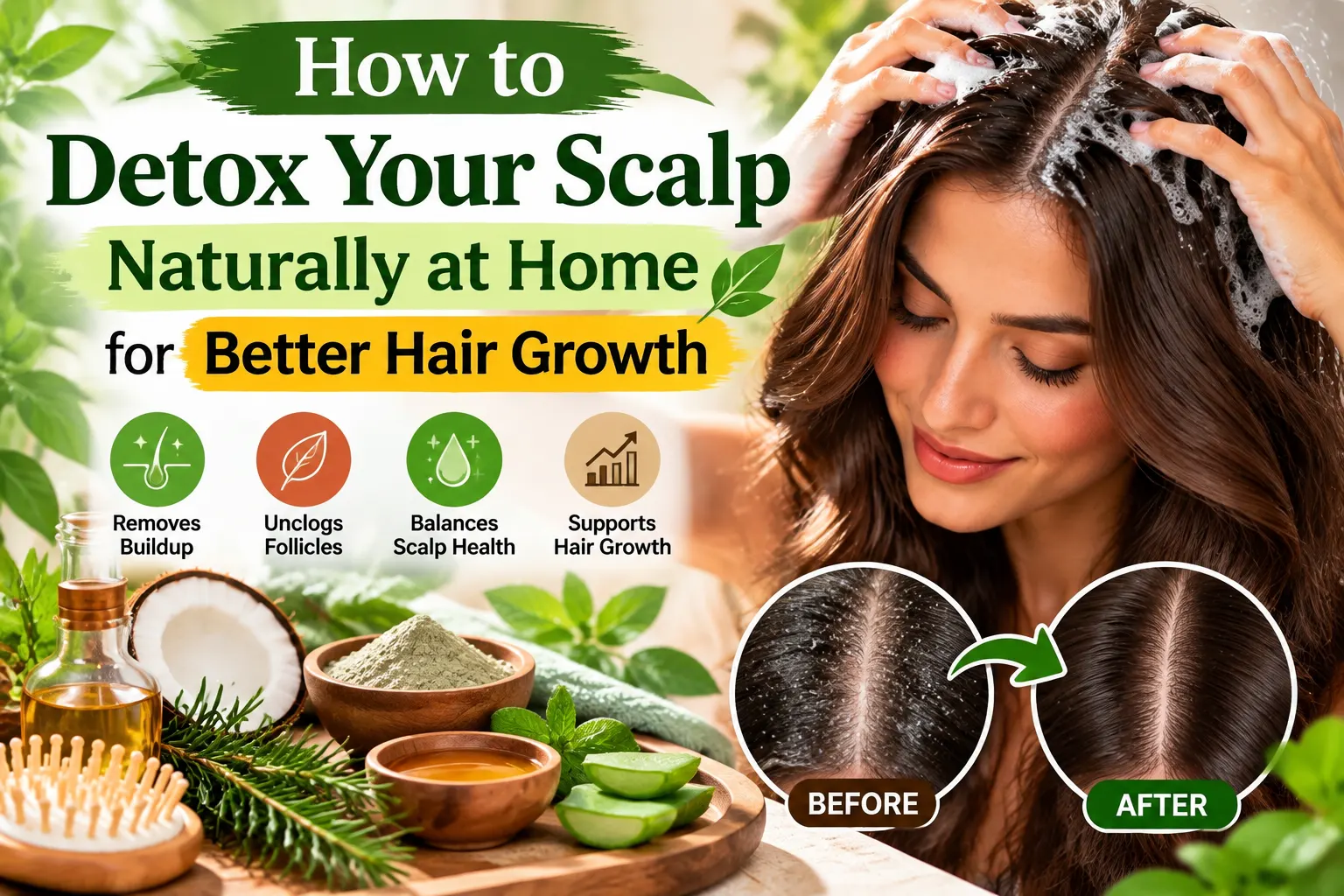
How to Detox Your Scalp Naturally at Home: A Complete Guide to Healthy Hair
Introduction
Healthy-looking hair starts with a healthy scalp. However, daily exposure to styling products, sweat, excess oil, environmental dirt, and dead skin cells can leave your roots feeling greasy, heavy, or uncomfortable. If your hair looks dull shortly after washing or your scalp feels coated with product residue, it may be time to review your hair care routine.
Learning how to detox your scalp naturally at home can help you manage product buildup and maintain a cleaner, more comfortable scalp without relying on harsh treatments. The key is to choose gentle cleansing methods, use products suited to your hair type, and avoid ingredients that can irritate sensitive skin.
Although the term scalp detox is popular in the beauty industry, it does not describe a medically established process for removing toxins from hair follicles. In most cases, a scalp detox simply means removing excess oil, loose flakes, sweat, and residue from hair care products.
It is also important to understand that cleansing your scalp does not automatically stimulate new hair growth or treat every cause of hair loss. A consistent scalp care routine can support good hygiene and reduce certain types of product-related discomfort, but persistent itching, inflammation, or thinning hair may require professional evaluation.
In this guide, you will learn how to identify scalp buildup, choose appropriate natural hair care ingredients, cleanse your scalp safely, and develop a practical routine for healthier-looking hair.
What Is a Scalp Detox?
A scalp detox is a hair care routine designed to remove accumulated residue, excess oil, sweat, and loose flakes from the scalp and hair roots.
Your scalp naturally produces sebum, an oily substance that helps lubricate the skin and hair. You may also use conditioners, leave-in treatments, gels, dry shampoo, hairspray, and other styling products that leave residue behind.
When these substances accumulate, your hair may feel heavier than usual, appear greasy, or become difficult to style. A suitable cleansing routine can help remove that residue and restore a fresher feeling.
However, your scalp does not generally need an aggressive detox treatment to function properly. Regular washing with a suitable shampoo is often enough for many people.
What Does a Scalp Detox Actually Do?
Depending on your hair care habits and the products you use, a scalp cleansing routine may help:
- Remove excess oil, sweat, and environmental dirt.
- Wash away residue from styling products.
- Reduce the heavy feeling associated with product buildup.
- Improve the appearance and manageability of the hair.
- Support regular scalp hygiene.
- Help you identify products that may be contributing to irritation or discomfort.
A scalp detox should not be confused with a treatment that removes toxins from the body, permanently unclogs every hair follicle, or guarantees faster hair growth.
For most people, the best approach is simple: cleanse the scalp effectively, avoid unnecessary irritation, and maintain a routine that suits individual needs.
What Causes Scalp Buildup?
Understanding the causes of scalp buildup can help you choose the right cleansing method instead of trying multiple unnecessary treatments.
1. Excess Sebum Production
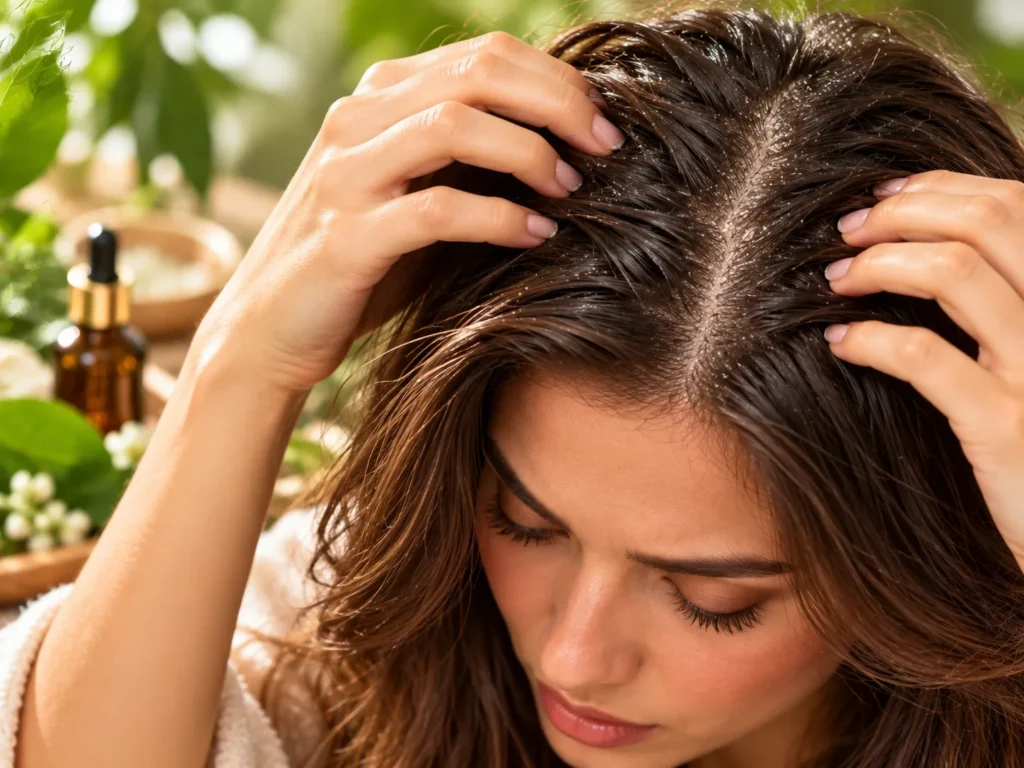
Sebum is produced by sebaceous glands located in the skin. It helps protect the scalp and lubricate the hair.
However, some people naturally produce more oil than others. Hormonal changes, individual skin characteristics, and environmental conditions can influence how oily the scalp feels.
When excess oil combines with sweat, loose skin cells, and product residue, the roots may begin to feel greasy or coated.
What can help: Use a shampoo appropriate for your scalp type and wash as often as needed to keep your scalp comfortable. People with oily scalps may need more frequent washing than those with dry or textured hair.
2. Hair Styling Products
Hair gels, pomades, waxes, hairsprays, dry shampoos, and leave-in products can leave residue when used frequently or applied in large amounts.
Some products also contain oils or other ingredients that may contribute to bumps along the hairline in susceptible individuals.
The American Academy of Dermatology explains that certain hair care products can contribute to breakouts around the forehead and hairline.
What can help: Apply styling products sparingly, avoid unnecessary layering, and wash your scalp regularly. If you notice new bumps after using a product, stop using it temporarily and see whether the problem improves.
3. Infrequent or Ineffective Cleansing
If you use styling products regularly but do not wash them out adequately, residue can accumulate over time.
This does not mean that everyone should wash their hair daily. The appropriate frequency depends on scalp oiliness, hair texture, exercise habits, styling practices, and individual comfort.
For some people, washing too frequently with a drying shampoo may cause unwanted dryness. For others, waiting too long between washes may leave the scalp oily and uncomfortable.
What can help: Find a washing schedule that removes residue without leaving your scalp irritated or your hair excessively dry.
4. Sweat and Environmental Dirt
Sweat, dust, and environmental particles can accumulate on the scalp and hair, particularly after exercise, outdoor activities, or long days in hot weather.
Sweat itself is not necessarily harmful, but allowing sweat and styling products to remain on the scalp for extended periods may contribute to discomfort for some people.
What can help: After heavy sweating, consider washing your scalp or rinsing and cleansing as appropriate for your hair type. Change out of damp headwear when possible and keep brushes and other hair tools clean.
5. Hard Water
Hard water contains higher concentrations of dissolved minerals, particularly calcium and magnesium. These minerals can interact with some cleansing products and contribute to deposits on hair.
People living in hard-water areas may notice that their hair feels rough, looks dull, or is more difficult to manage.
However, hard water should not automatically be described as blocking hair follicles or causing hair loss. Its effects vary depending on the water, products, and individual hair characteristics.
What can help: If you suspect hard water is affecting your hair, try a suitable clarifying shampoo or a product specifically formulated for mineral residue. Follow the product instructions and use a moisturizing conditioner if needed.
6. Dandruff and Other Scalp Conditions
Not every flaky scalp has product buildup.
Dandruff, seborrheic dermatitis, psoriasis, eczema, and other conditions can cause flaking, redness, itching, or irritation. Their underlying causes and treatments differ.
The American Academy of Dermatology notes that dandruff is not simply a sign of poor hygiene. Regular cleansing or a medicated dandruff shampoo may help, depending on the condition.
If your scalp has persistent redness, thick scales, painful areas, sores, or significant itching, do not assume that a DIY detox is the answer. A dermatologist can help identify the cause and recommend suitable treatment.
Signs Your Scalp May Have Product Buildup
The following signs may suggest that your current hair care routine needs adjustment:
- Your roots feel greasy soon after washing.
- Your hair feels coated, heavy, or difficult to style.
- Styling products appear to accumulate around the roots.
- Your hair looks dull despite regular conditioning.
- You notice residue around the hairline.
- Your scalp feels uncomfortable after using several styling products.
These symptoms are not specific to product buildup. For example, itching and flakes can also occur with dandruff, contact dermatitis, or other skin conditions.
Pay attention to when symptoms begin, which products you use, and whether changing your routine improves the situation.
If symptoms persist despite gentle cleansing, seek professional advice instead of repeatedly exfoliating your scalp.
How to Detox Your Scalp Naturally at Home
A safe home scalp cleansing routine does not need to involve several masks, strong acids, or complicated mixtures.
The following steps focus on gentle cleansing, reducing unnecessary residue, and protecting the scalp’s natural barrier.
Step 1: Identify Your Scalp Type
Before selecting a cleansing method, determine whether your scalp is oily, dry, sensitive, or prone to flaking.
Oily scalp: Your roots become greasy quickly, and you may need to wash more frequently.
Dry scalp: Your skin may feel tight or uncomfortable, especially after using drying products.
Sensitive scalp: You may experience burning, itching, or redness after introducing new ingredients or fragrances.
Flaky scalp: You notice loose flakes or scales. These may be associated with dryness, dandruff, or another scalp condition.
Your scalp and hair can have different needs. For example, your roots may be oily while your hair lengths are dry.
Choose cleansing products based on the condition of your scalp while using conditioner to protect the lengths and ends of your hair.
Step 2: Remove Tangled Hair Gently
Before washing, gently detangle your hair if needed.
Use a wide-tooth comb or a suitable brush, working carefully through knots rather than pulling forcefully. If your hair is curly, coily, chemically treated, or particularly fragile, use a detangling method appropriate for its texture.
Aggressive brushing can cause breakage and unnecessary tension. There is no need to scrub, scrape, or vigorously brush the scalp to prepare it for cleansing.
Avoid dry brushing if it causes discomfort, worsens flakes, or irritates your skin.
Step 3: Choose a Gentle Shampoo
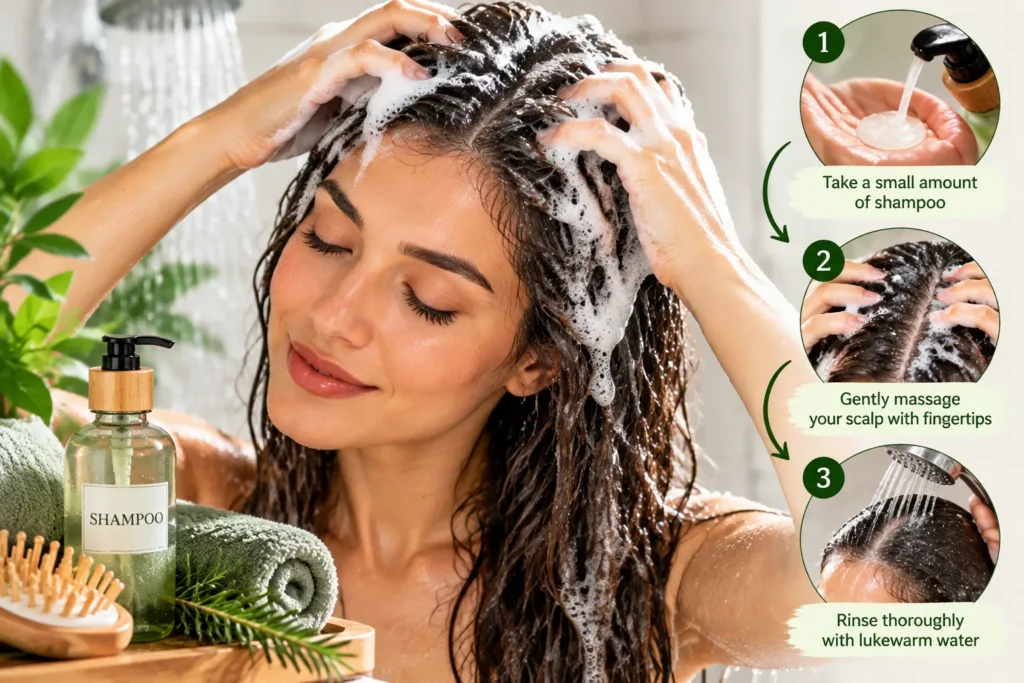
For many people, shampoo is the most practical and reliable starting point for removing scalp buildup.
Look for a shampoo that suits your scalp and hair type. If you regularly use heavy styling products, a clarifying shampoo may help remove residue when used according to its instructions.
However, clarifying shampoos can be drying for some people, particularly when used too frequently or on fragile hair.
To wash effectively:
- Thoroughly wet your scalp and hair with lukewarm water.
- Apply an appropriate amount of shampoo to the scalp.
- Massage gently using your fingertips rather than your fingernails.
- Work the shampoo across the areas where oil and residue tend to accumulate.
- Rinse thoroughly so that shampoo does not remain on the scalp.
- Repeat only if necessary and consistent with the product instructions.
Avoid aggressively rubbing the hair lengths together. Concentrate cleansing on the scalp, allowing the shampoo to flow through the lengths as you rinse.
If your scalp is very sensitive, begin with a gentle, fragrance-free shampoo rather than a strong clarifying treatment.
Step 4: Consider a Clarifying Shampoo When Needed
A clarifying shampoo is formulated to help remove residue from styling products and excess oils.
It may be useful if you frequently use gels, waxes, sprays, or dry shampoo, or if your hair feels coated despite regular washing.
Clarifying shampoo is not necessary for everyone. There is no universal schedule that works for all hair types.
Consider these general guidelines:
- If you rarely use styling products, your regular shampoo may be sufficient.
- If you use heavy styling products, occasional clarification may help.
- If your hair is dry, bleached, curly, or fragile, choose products carefully to avoid excessive dryness.
- If you experience burning, itching, or redness, stop using the product and reassess your routine.
Follow the label instructions rather than leaving the shampoo on longer than recommended.
If your scalp problems are caused by dandruff or another medical condition, a clarifying shampoo may not address the underlying issue.
Step 5: Use Conditioner to Protect Your Hair
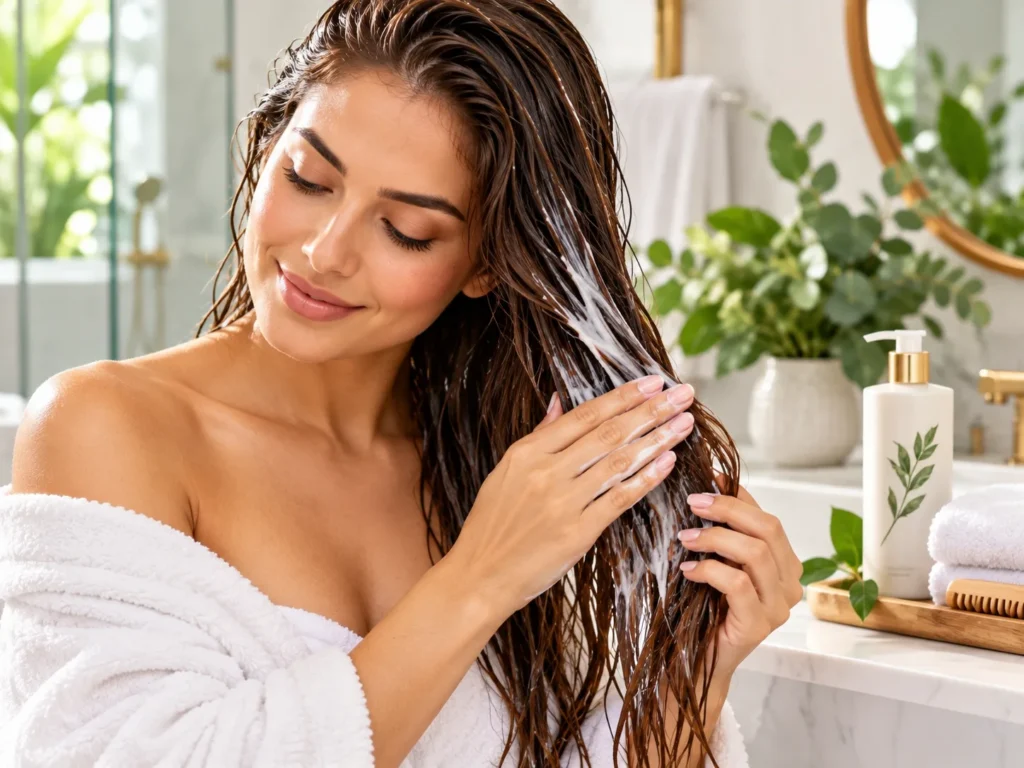
After shampooing, apply conditioner to help improve softness, reduce tangling, and minimize friction-related damage.
Most people benefit from applying conditioner to the mid-lengths and ends. Depending on your hair type and the product instructions, you may also use a scalp-compatible conditioner.
People with fine or oily hair may prefer lighter formulations, while those with dry, curly, or textured hair may benefit from richer conditioning products.
Conditioner does not need to be avoided entirely just because you are removing buildup. The goal is to cleanse the scalp while maintaining the condition of the hair shaft.
Rinse the product thoroughly if the label directs you to do so.
Step 6: Rinse Thoroughly
Rinsing is an important but often overlooked part of scalp care.
Residual shampoo or conditioner may leave hair feeling coated or uncomfortable, particularly if a large amount of product has been used.
Use lukewarm water and make sure all areas of the scalp are rinsed.
Very hot water is unnecessary and may worsen dryness or discomfort for some people.
You do not need an ice-cold final rinse to seal the hair cuticle or lock in hydration. A comfortable water temperature is sufficient for routine cleansing.
Step 7: Dry Your Hair Without Excessive Friction
After washing, gently squeeze excess water from your hair using a soft towel or microfiber towel.
Avoid vigorous rubbing, which can contribute to tangles and breakage.
If you use a blow dryer, consider a lower heat setting and avoid holding the dryer too close to your scalp.
Allowing your scalp and hair to dry comfortably can help you maintain a practical routine without introducing unnecessary friction or heat damage.
Natural Ingredients for Scalp Care: What to Know
Many people prefer botanical ingredients because they fit their personal hair care preferences. However, natural does not automatically mean gentle, effective, or suitable for every scalp.
Before trying a home remedy, understand what it may do, what evidence is missing, and what risks it may present.
1. Aloe Vera
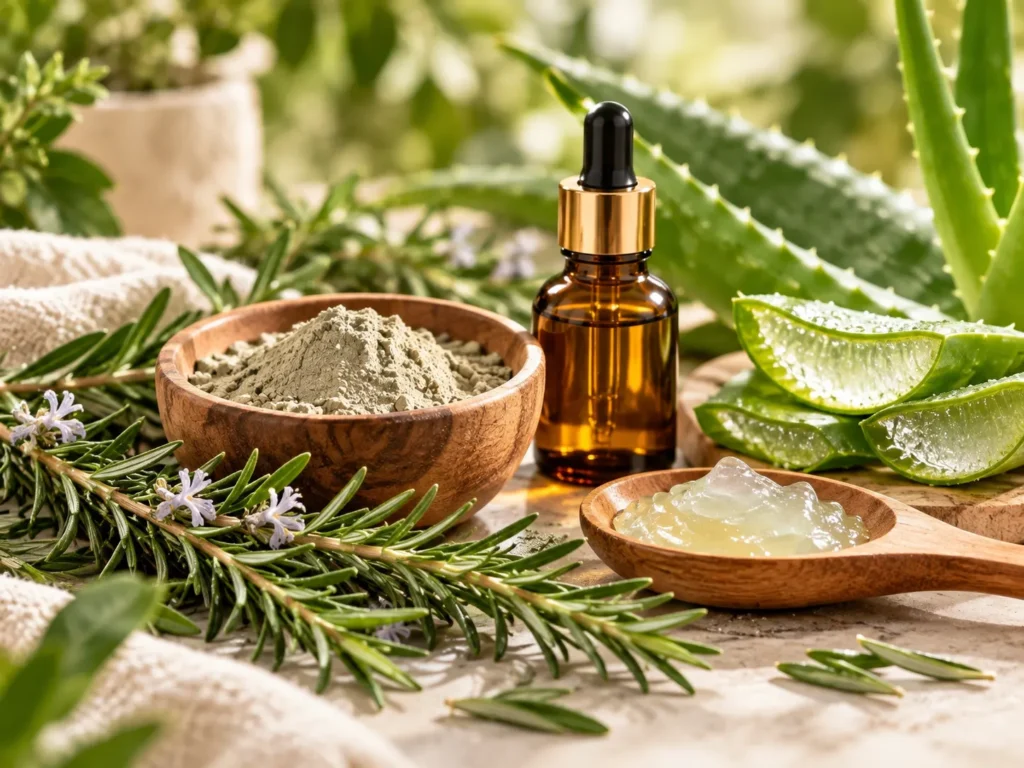
Aloe vera is commonly used in skin care products because of its moisturizing properties.
Some people prefer aloe-based products when their scalp feels dry. However, evidence that aloe vera scalp masks remove buildup or stimulate hair growth is limited.
If you choose an aloe product, select one intended for topical use and check its ingredient list for fragrances or other ingredients that may cause irritation.
Avoid applying a new product to inflamed or broken skin. Stop using it if you notice redness, itching, or burning.
2. Apple Cider Vinegar
Apple cider vinegar is frequently promoted online as a natural scalp cleanser because it contains acetic acid.
However, there is insufficient evidence to recommend homemade apple cider vinegar mixtures as a proven scalp detox or hair-growth treatment.
Undiluted vinegar can irritate the skin, and even diluted mixtures may be unsuitable for sensitive or damaged scalps. Mixing vinegar with other ingredients does not automatically make it safe.
For routine removal of product buildup, a suitable shampoo is generally a more predictable option.
If you have a scalp condition or are experiencing persistent itching and flakes, do not use vinegar as a substitute for appropriate treatment.
3. Bentonite and Kaolin Clay
Bentonite and kaolin are clays used in various cosmetic products.
Clay-based masks may absorb some surface oil, depending on the formulation. However, claims that clay pulls heavy metals, toxins, or deep-seated impurities from hair follicles should not be treated as established medical facts.
Clay masks may also dry out the hair or irritate the scalp, particularly when left on too long or allowed to become difficult to remove.
If you choose a cosmetic clay product, follow its instructions and ensure that it is intended for the application you have in mind. Avoid aggressive scrubbing or using a mask on an irritated scalp.
A clay mask is optional, not a necessary part of a healthy scalp routine.
4. Rosemary Oil
Rosemary oil is popular in hair care products, and some research has investigated its potential role in hair growth. However, evidence remains limited, and results from one study do not establish that homemade rosemary oil mixtures are effective for everyone.
Essential oils can cause allergic reactions and irritation, especially when used undiluted.
Never apply concentrated rosemary essential oil directly to your scalp. If you choose an essential-oil product, follow its specific instructions and discontinue use if irritation develops.
Rosemary oil should not replace a medical assessment for persistent hair thinning or hair loss.
5. Shikakai and Amla
Shikakai and amla are traditional ingredients used in some Ayurvedic hair care preparations.
Their use has a long history in traditional practices, but the strength of evidence for particular hair-growth claims varies.
Powders and botanical preparations can differ in purity, formulation, and potential to irritate the skin. Some products may also be difficult to rinse completely from certain hair textures.
If you want to try an herbal cleanser, choose a reputable product with clear ingredient information and directions for use.
There is no need to combine several botanical ingredients to obtain a clean scalp.
6. Jojoba Oil
Jojoba oil is used in cosmetic products designed to soften hair and skin.
Although it may help improve the feel of dry hair, applying additional oil directly to an oily or buildup-prone scalp may not be helpful for everyone.
Some people also develop irritation or breakouts from certain hair care products.
If your scalp is already greasy or you notice bumps near your hairline, consider reducing scalp oils and heavy styling products rather than adding more.
Important: No natural ingredient is required for scalp detoxing. A suitable shampoo and conditioner may be all you need.
Should You Use a DIY Scalp Detox Mask?
DIY scalp masks are widely shared online, but combining household ingredients does not guarantee that a treatment is safe or effective.
For example, a mixture containing clay, vinegar, and essential oils may expose your scalp to drying ingredients, acidity, and potential allergens at the same time.
This can make it difficult to identify which ingredient caused a reaction.
A safer approach is to keep your routine simple:
- Select a shampoo suited to your scalp type.
- Use a clarifying shampoo when appropriate for product residue.
- Condition your hair according to its needs.
- Avoid introducing several new ingredients simultaneously.
- Stop any treatment that causes irritation.
If you prefer botanical products, consider a professionally formulated product with clear instructions rather than experimenting with concentrated ingredients.
Patch testing may help identify some skin reactions, but it cannot guarantee that a product will be safe when applied to the entire scalp.
How Often Should You Detox Your Scalp?
There is no scientifically established scalp detox schedule that applies to everyone. The right frequency depends on your scalp, hair texture, styling habits, and the products you use.
For Oily Scalps
People with oily scalps may need to shampoo more frequently to manage sebum and residue.
Choose a suitable shampoo and adjust your routine based on how your scalp feels rather than following a fixed detox calendar.
For Dry Scalps
If your scalp feels dry or tight, avoid unnecessary clarifying treatments and strong DIY ingredients.
A gentle shampoo and appropriate conditioning products may be more suitable. If dryness persists, consider whether a product is causing irritation or whether another scalp condition may be involved.
For Curly and Coily Hair
Curly and coily hair may be more vulnerable to dryness and mechanical breakage. The scalp still needs cleansing, but the washing schedule and product selection should reflect the person’s hair texture and styling practices.
Use a cleansing method that removes residue without creating excessive dryness or tangling.
For Color-Treated Hair
Clarifying products may affect the appearance or longevity of some hair color treatments.
Check the product label and ask your colorist for advice if your hair has been bleached, dyed, relaxed, or chemically treated.
For Frequent Styling Product Users
If you regularly use dry shampoo, gels, waxes, or hairspray, you may benefit from occasional clarifying shampoo.
The frequency should depend on actual residue and how your scalp and hair respond. More cleansing is not automatically better.
Can a Scalp Detox Help Hair Growth?
This is one of the most common questions about natural scalp detoxing.
The short answer is that removing product buildup may improve scalp cleanliness, but scalp detoxing is not a proven treatment for hair loss or a guaranteed way to grow hair faster.
Hair growth is influenced by several factors, including genetics, hormones, age, nutritional status, certain medical conditions, medications, and hair care practices.
A clean scalp is part of general hair care, but it does not necessarily change the biological factors responsible for hair thinning.
How Scalp Care Can Support Healthier-Looking Hair
A suitable cleansing routine can help remove residue and reduce discomfort associated with certain hair care habits.
Gentle handling, conditioning, and avoiding excessive heat or tension can also help reduce hair breakage.
This may make hair look and feel healthier, even when the routine does not increase the rate of growth from the follicle.
What to Do If Your Hair Is Thinning
If you notice widening parts, bald patches, persistent shedding, or a receding hairline, do not rely on scalp detox masks alone.
The American Academy of Dermatology recommends identifying the cause of hair loss because treatment depends on the type and underlying reason.
A dermatologist can evaluate your scalp, review your medical history, and discuss suitable treatment options.
Early assessment may be particularly important when hair loss is sudden, patchy, painful, or associated with inflammation.
How to Maintain a Healthy Scalp After Cleansing
Once you have removed excess residue, the next step is to maintain a consistent and comfortable hair care routine.
Use Products Appropriate for Your Scalp
Choose shampoo based on your scalp’s needs rather than purchasing products solely because they promise detoxification or rapid hair growth.
If a product causes persistent itching or redness, stop using it and consider switching to a gentler formulation.
Avoid Excessive Product Layering
Using several oils, leave-in conditioners, styling creams, and sprays at once may make your hair feel heavy.
Start with the products you actually need and add others only when they provide a clear benefit.
Clean Hair Tools Regularly
Brushes, combs, and styling tools can accumulate loose hair and product residue.
Remove trapped hair and clean tools according to their material and the manufacturer’s instructions.
Avoid sharing tools that may carry scalp debris or contribute to the spread of certain scalp conditions.
Protect Your Hair From Mechanical Damage
Avoid tight hairstyles that create persistent tension, aggressive brushing, and unnecessary heat exposure.
Conditioning products and gentle detangling can help reduce friction and breakage.
Pay Attention to Changes
Notice whether itching, flakes, oiliness, or discomfort develops after using a new shampoo, oil, or styling product.
Keeping a simple record of products and symptoms may help you identify patterns.
If symptoms continue despite changing your routine, seek professional advice rather than increasing the intensity of your treatments.
Common Scalp Detox Mistakes to Avoid
Even a well-intentioned hair care routine can cause problems when it relies on aggressive methods.
Using Undiluted Apple Cider Vinegar
Vinegar is acidic and can irritate skin. Do not assume that a natural acid is safe for direct application to the scalp.
Scrubbing With Fingernails
Scratching can damage the skin and increase irritation. Massage shampoo gently with your fingertips instead.
Leaving Clay Masks on Until They Become Hard
A mask that becomes excessively dry may be difficult to remove and may leave your scalp feeling uncomfortable. Follow product instructions and discontinue use if irritation develops.
Applying Undiluted Essential Oils
Concentrated essential oils may cause irritation or allergic contact dermatitis. Avoid applying them directly to the scalp.
Using Too Many Products at Once
Combining several new products makes it harder to determine which one is helping or causing a reaction.
Introduce products gradually and keep the routine simple.
Treating Every Flake as Product Buildup
Flakes can be associated with dandruff, psoriasis, eczema, and other conditions. Scrubbing harder may worsen irritation instead of addressing the cause.
Expecting Immediate Hair Growth
Hair grows through a biological cycle. Cleansing does not guarantee that dormant follicles will produce new hair or that thinning will reverse.
If hair loss is your main concern, focus on identifying its cause rather than repeatedly detoxing your scalp.
When Should You See a Dermatologist?
Home hair care may be appropriate for ordinary product residue, but some scalp symptoms need medical evaluation.
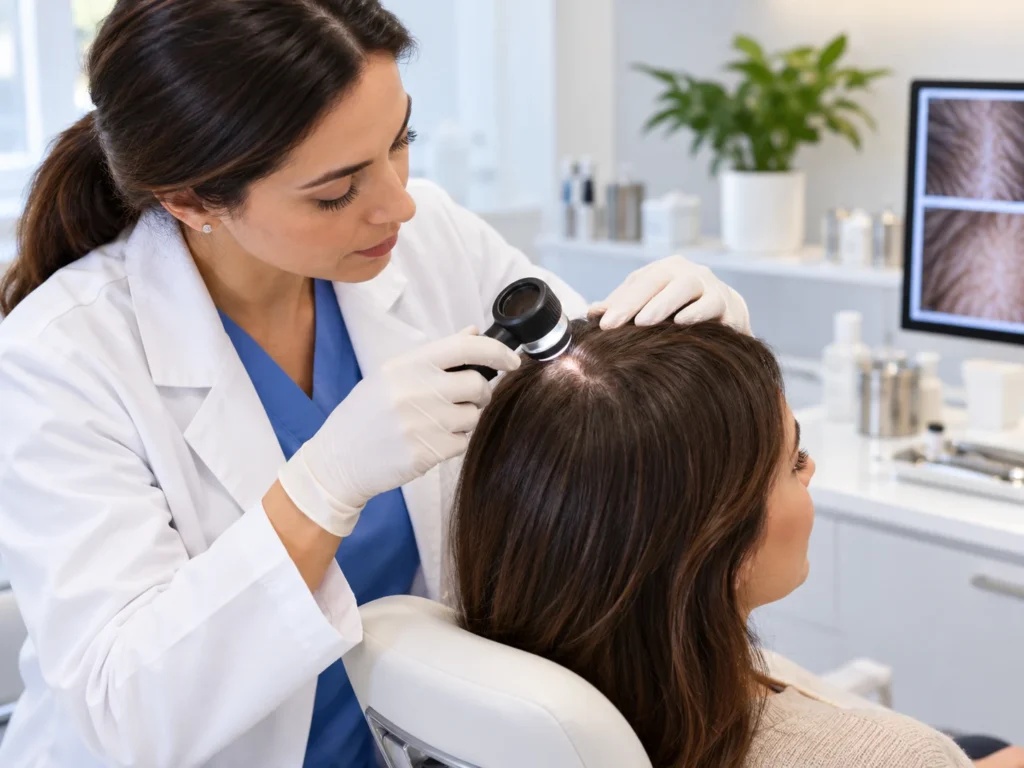
Consider making an appointment with a dermatologist if you experience:
- Persistent or severe scalp itching.
- Redness, swelling, or significant discomfort.
- Thick or recurring scales.
- Painful bumps, sores, or crusting.
- Sudden or patchy hair loss.
- Noticeable thinning that continues over time.
- Symptoms that do not improve after changing your hair care routine.
A healthcare professional can determine whether the issue is related to product irritation, dandruff, a skin condition, infection, or another cause.
Seek prompt medical advice for sudden significant hair loss or a painful, inflamed scalp rather than trying increasingly strong home remedies.
Frequently Asked Questions
1. How Can I Detox My Scalp Naturally at Home?
Start by choosing a shampoo suitable for your scalp type. Wet your hair, gently massage the shampoo into the scalp, and rinse thoroughly. Use conditioner to protect your hair lengths.
If you frequently use heavy styling products, consider an appropriate clarifying shampoo according to its instructions. You do not need a complicated DIY mask to maintain scalp cleanliness.
2. What Is the Best Natural Ingredient for Scalp Buildup?
There is no single natural ingredient proven to be the best scalp detox treatment.
A suitable shampoo is generally a practical starting point for removing oil and styling residue. Some cosmetic products contain botanical ingredients, but their effectiveness depends on the formulation.
Avoid assuming that vinegar, clay, or essential oils are automatically safer or more effective than conventional hair care products.
3. Can Apple Cider Vinegar Remove Scalp Buildup?
Apple cider vinegar is promoted as a home remedy, but strong evidence supporting homemade vinegar rinses as a scalp detox treatment is lacking.
Because vinegar is acidic, it can irritate the skin, particularly when undiluted or applied to a sensitive scalp. A suitable shampoo is a more predictable option for routine cleansing.
4. Does Scalp Detoxing Help Hair Grow Faster?
There is no reliable evidence that a scalp detox routine makes hair grow faster in general.
Removing residue can improve cleanliness and the feel of your hair, while gentle conditioning and styling practices may help reduce breakage. Hair loss and slow growth can have multiple causes that require different approaches.
5. How Often Should I Use a Clarifying Shampoo?
The ideal frequency depends on your scalp, hair type, and styling habits. People who use heavy products may need clarification occasionally, while others may not need it at all.
Follow the product label and reduce use if you notice excessive dryness or irritation.
6. Is Bentonite Clay Safe for All Hair Types?
No. Individual reactions vary, and clay masks may dry out hair or irritate the scalp. There is also limited evidence that homemade clay masks provide special scalp detox benefits.
If you choose a cosmetic clay product, use one intended for your application and follow the instructions. Avoid using it on irritated or broken skin.
7. Why Does My Scalp Itch After a Detox Treatment?
Itching may occur because of irritation, dryness, an allergic reaction, or an underlying scalp condition.
Stop using the treatment, rinse away any remaining product, and avoid adding other active ingredients to the area. Seek medical advice if symptoms are severe, persistent, or accompanied by swelling or sores.
8. Can Scalp Buildup Cause Hair Loss?
Product buildup can contribute to scalp discomfort and may be associated with certain skin problems, but it should not automatically be blamed for hair loss.
Hair loss has many possible causes, including hereditary factors, illness, nutritional deficiencies, medications, and scalp disorders. A dermatologist can help identify the underlying cause.
9. Is a Scalp Detox Suitable for Dry and Flaky Scalps?
Not every dry or flaky scalp needs detoxification. Dryness, dandruff, eczema, and psoriasis may look similar but require different care.
A gentle shampoo may be appropriate for simple dryness, while persistent dandruff or inflammation may require a targeted treatment. Avoid aggressive exfoliation when the scalp is irritated.
10. Should I Apply Hair Oil After a Scalp Detox?
Hair oil is optional. Some people use oils to soften their hair, but applying additional oil to an already oily scalp may not be helpful.
Consider applying a suitable conditioning product to your hair lengths and ends. If scalp oils cause itching or bumps, discontinue them.
11. Can Hard Water Cause Scalp Buildup?
Hard water contains minerals that can interact with cleansing products and affect the feel of your hair.
If you suspect mineral residue, consider a suitable clarifying product or a shampoo formulated for hard-water concerns. Hard water should not automatically be considered the cause of scalp inflammation or hair loss.
12. Can I Detox My Scalp if I Have Color-Treated Hair?
You may be able to use a suitable cleansing product, but some clarifying shampoos can affect color longevity or increase dryness.
Choose products labeled as appropriate for color-treated hair and follow their directions. Consult your stylist if your hair has undergone bleaching or other chemical treatments.
13. Does Rosemary Oil Detox Hair Follicles?
There is no established evidence that rosemary oil detoxifies hair follicles.
Some research has explored rosemary oil in relation to hair growth, but the evidence is limited. Essential oils can also cause irritation, so avoid applying concentrated oils directly to your scalp.
14. What Is the Difference Between Scalp Detoxing and Dandruff Treatment?
Scalp detoxing generally refers to removing product residue, excess oil, and loose debris.
Dandruff treatment focuses on managing a scalp condition that can cause flakes and itching. Depending on the symptoms, an appropriate medicated shampoo may be more useful than a detox mask.
15. What Is the Simplest Scalp Care Routine for Healthy Hair?
For many people, a simple routine includes:
- Shampooing as often as needed for their scalp type.
- Using conditioner to reduce dryness and breakage.
- Limiting unnecessary styling products.
- Avoiding harsh scrubbing and excessive heat.
- Seeking professional advice for persistent scalp symptoms or hair loss.
Consistency and appropriate product selection are generally more useful than complicated detox routines.
Final Thoughts
Learning how to detox your scalp naturally at home does not require expensive products or harsh DIY treatments. In many cases, a suitable shampoo, thorough rinsing, appropriate conditioning, and gentle hair handling are enough to manage everyday buildup.
Natural ingredients such as aloe vera, clay, apple cider vinegar, and essential oils are often promoted for scalp care, but they are not necessary for everyone. Some can also irritate the skin or make hair feel dry.
Choose products based on your scalp’s needs, avoid exaggerated claims about rapid hair growth, and pay attention to persistent symptoms. If you experience ongoing irritation, unusual flaking, or hair loss, consult a qualified dermatologist to identify the cause and discuss suitable treatment.
A consistent, evidence-informed routine is a more practical starting point for maintaining a comfortable scalp and healthier-looking hair than relying on aggressive detox treatments.
Medical Disclaimer
This article is for general educational purposes only and is not a substitute for professional medical advice, diagnosis, or treatment. Individual scalp and hair concerns may require evaluation by a qualified healthcare professional. Discontinue any product that causes irritation, and consult a dermatologist if symptoms persist or worsen.
Suggested Internal Links
Add these internal links where relevant, using existing pages on your website:
- How to Choose the Right Shampoo for Your Hair Type — link from the shampoo section.
- Natural Hair Care Tips for Healthy-Looking Hair — link from the maintenance section.
- Common Causes of Hair Loss and When to Seek Help — link from the hair growth section.
- How to Manage a Dry and Itchy Scalp — link from the scalp symptoms section.
- Benefits and Risks of Rosemary Oil for Hair — link from the natural ingredients section.
Only publish these internal links if the corresponding pages exist or after creating useful, original pages for those topics.
Recommended External References
- American Academy of Dermatology — Hair Care and Hair Loss
- American Academy of Dermatology — Hair Loss: Tips for Managing
- American Academy of Dermatology — How to Treat Dandruff
- Cleveland Clinic — Smelly Scalp: Causes and At-Home Treatments
- American Academy of Dermatology — Hair Loss: Overview
Use external references near the relevant claims in the published article. Confirm that each source supports the exact claim you attach to it.